Across the world, millions of children attend school each day yet leave without mastering foundational numeracy, the bedrock for lifelong learning. Improving foundational numeracy at scale requires more than individual efforts — it demands a shared community, honest reflection, and practical tools to improve numeracy outcomes and to scale what works. The recent NRD workshop brought partners together to do exactly that: align on what’s working, confront what isn’t, and co-create the next phase of Africa-led numeracy innovation.
The workshop set out to do more than share progress. Its goal was to strengthen existing relationships, synthesize learning and share best practices, spark collaboration and define what success looks like. Participants explored the latest insights emerging from NRD-supported projects, identifying common threads across countries and contexts.
Each day was structured around key themes:
- Day 1 focused on learning from the field – sharing key insights, surfacing what is emerging about effective numeracy teaching practices in low-resource classrooms, and identifying gaps in evidence.
- Day 2 shifted to reflection and adaptation – engaging participants in examining their intervention designs, theories of change and how their plans inform scalable policy and programming. Teams interrogated what it really takes to sustain change in classrooms and systems.
- Day 3 looked ahead – to the future of collaboration, cross-country learning, and evidence uptake. Participants discussed how to ensure that their intervention designs influence real-world practice and policy across Africa and beyond.
Connecting evidence to practise
A defining feature of the NRD workshop was its emphasis on bridging the research-to-practice divide. Conversations moved beyond the “what” of research to the “so what” insights mean for teachers, learners, and governments.
One lively discussion explored how teachers in large, low-resource classrooms can practically apply evidence-based methods. Participants noted that while lesson designs are often rich and rigorous, classroom realities – from 60+ learners per class to limited teaching aids, can constrain implementation. This sparked a conversation on defining a NRD pedagogical package within interventions, that will ensure that rigor is maintained while adapting to context.
Another session delved into measurement and data use, examining how evidence generated through the NRD portfolio can inform not just local program design but also national education strategies. Participants emphasized the importance of “translating” technical insights into language that decision-makers can act on.
Building a learning community
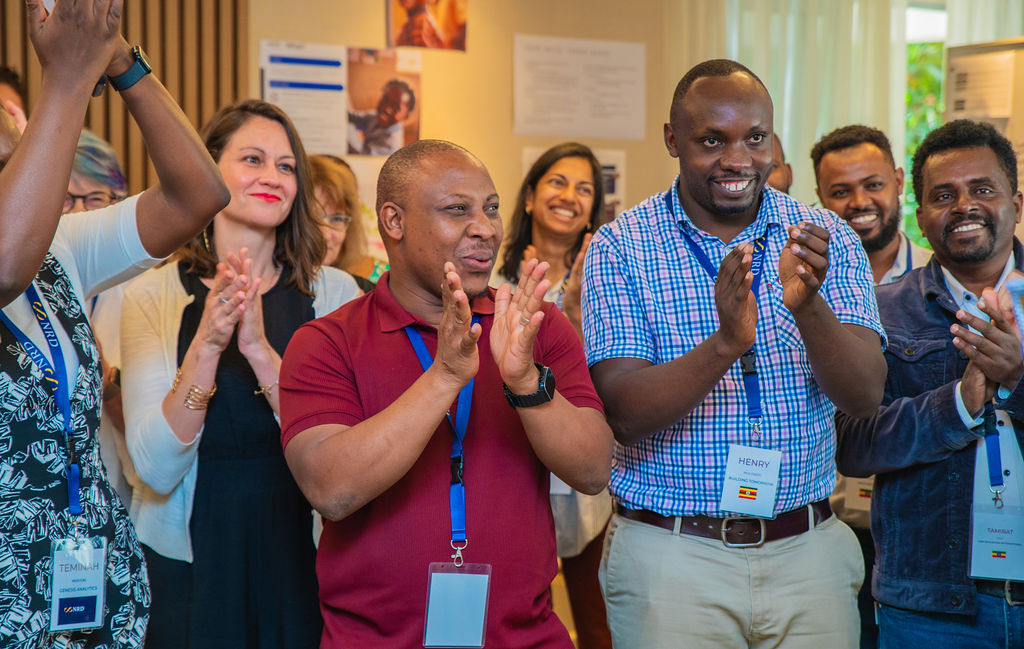
Beyond technical sessions, the workshop fostered a strong sense of community among NRD partners. Participants appreciated the rare opportunity to step away from daily delivery pressures and reflect together on the bigger picture.
The three days were marked by honest conversations, about challenges, learning curves, and the often invisible labor of innovation in complex systems. The atmosphere was open, collegial, and intellectually generous.
As one participant shared, “This was not just a meeting, it was a moment of alignment. We are not working in isolation; we are part of a maths community redefining how the world approaches foundational numeracy.”
Looking ahead
The workshop closed with renewed momentum for the next phase of the NRD journey. Participants identified three shared priorities for the coming year:
- Strengthening programming: ensuring that designs, workplans and budgets cater to the most remote learners and are reflective of true teaching and learning maths happening.
- Deepening partnerships: building mechanisms for continued cross-learning across the NRD ecosystem.
- Elevating African-led evidence: positioning insights from NRD-supported work within global conversations on foundational numeracy and learning equity.
As the NRD Fund moves forward, it remains guided by a simple conviction: evidence must lead to action. The initiative will continue to test, learn, and share insights that can shape more effective, contextually grounded solutions for children across the continent.
To learn more about the NRD Fund and stay updated on emerging insights, look out for resources on this website and join our community of practise group on linkedin via this link #NumeracyForAll #EducationResearch #AfricaLearning.
Elsie Adeya is the Project Manager for the Numeracy Research and Development (NRD) Fund, an initiative supported by the Gates Foundation, Hempel Foundation and Founder’s Pledge. Based in Nairobi, she provides programmatic oversight to align funding, technical support, and collective learning, to strengthen numeracy interventions, improving teacher training, and catalyzing government investment across Sub-Saharan Africa. Views expressed are the author’s own.